Should you trust your intuition to make decisions?

In today's demanding business environment, decision-making in managerial leadership is a daily challenge requiring rapid judgment under pressure.
This "internal compass"—the culmination of accumulated experience and pattern recognition—can be a powerful asset for leaders.
However, relying on gut instinct is not without risk. Understanding the precise conditions where intuition excels versus where analytical rigor is mandatory is critical.
 Author: Thierry P. Gaillard -



Intuition is essential in certain decision contexts
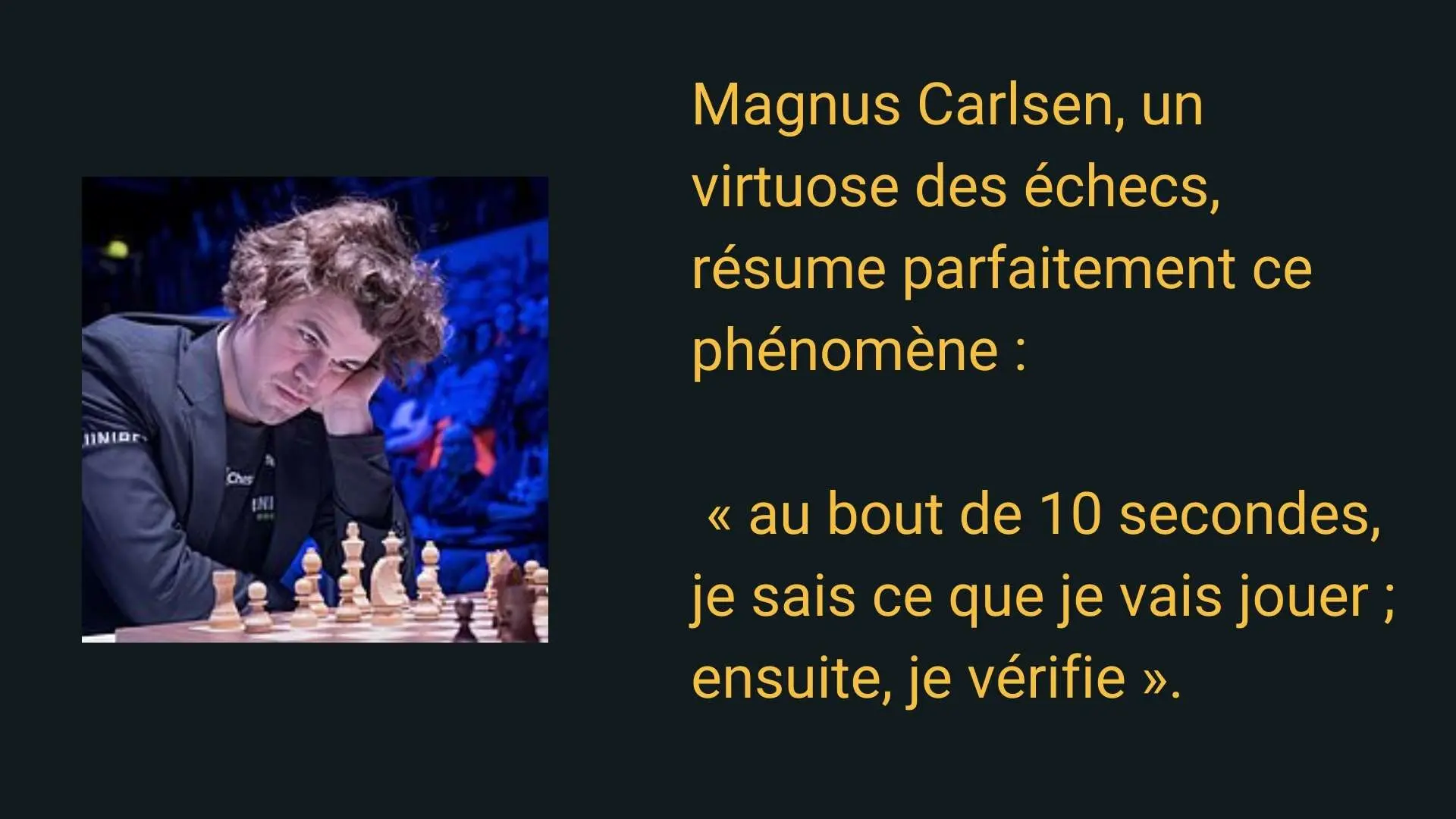
Take the example of Magnus Carlsen, World Chess Champion, who admits knowing his next move after just ten seconds of contemplation, even though he spends several minutes verifying his initial hunch. This anecdote perfectly illustrates the essence of intuition: expertise disguised as instinct.
The naturalist school of decision-making championed by Gary Klein, through observing military commanders, surgeons, and emergency responders, demonstrates that intuition plays a vital role when time is scarce and exhaustive analysis is impossible. These professionals do not deliberate through endless spreadsheets; they act on pattern recognition born of extensive field experience.

Two essential conditions to trust intuition
However, intuition has sharp limits. It can lead to severe cognitive blunders when grounded in incomplete or biased data. Foundational research by Kahneman and Tversky reveals how our intuition systematically fails in probabilistic assessments, highlighting why unchecked gut feelings can betray us.
The key is neither to reject nor blindly worship intuition, but to understand precisely when and how to deploy it wisely.
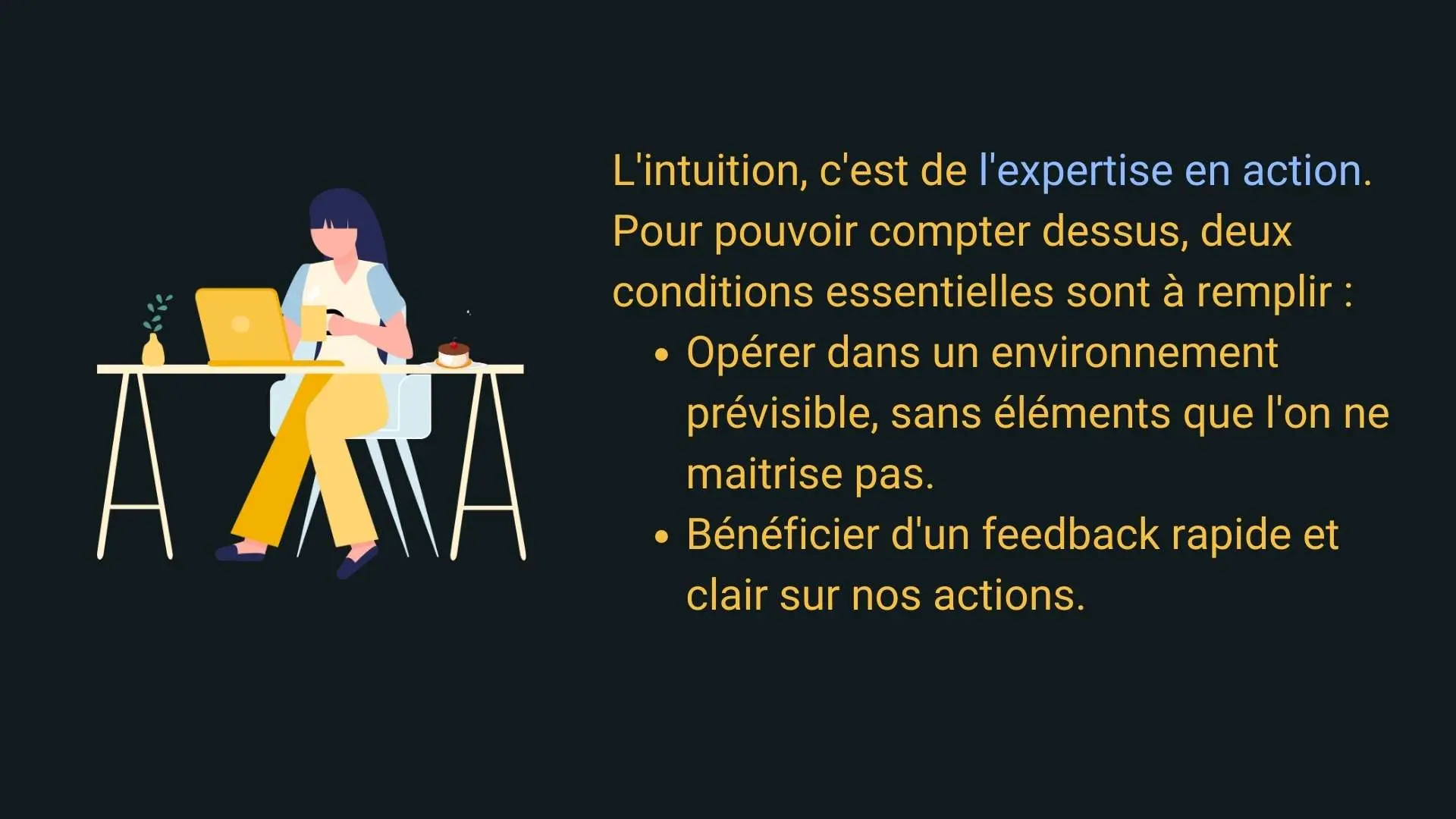
Intuition is essentially expertise in action, as Napoleon famously observed: an instantaneous resonance with similar situations previously encountered.
To rely on intuition with confidence, two essential conditions must be met:
- Operating in a predictable environment, free of major uncontrollable uncertainties.
- Benefiting from rapid and unambiguous feedback on the consequences of our actions.
Intuition is ideal for low-stakes daily decisions
So, how should leaders apply this principle in business?
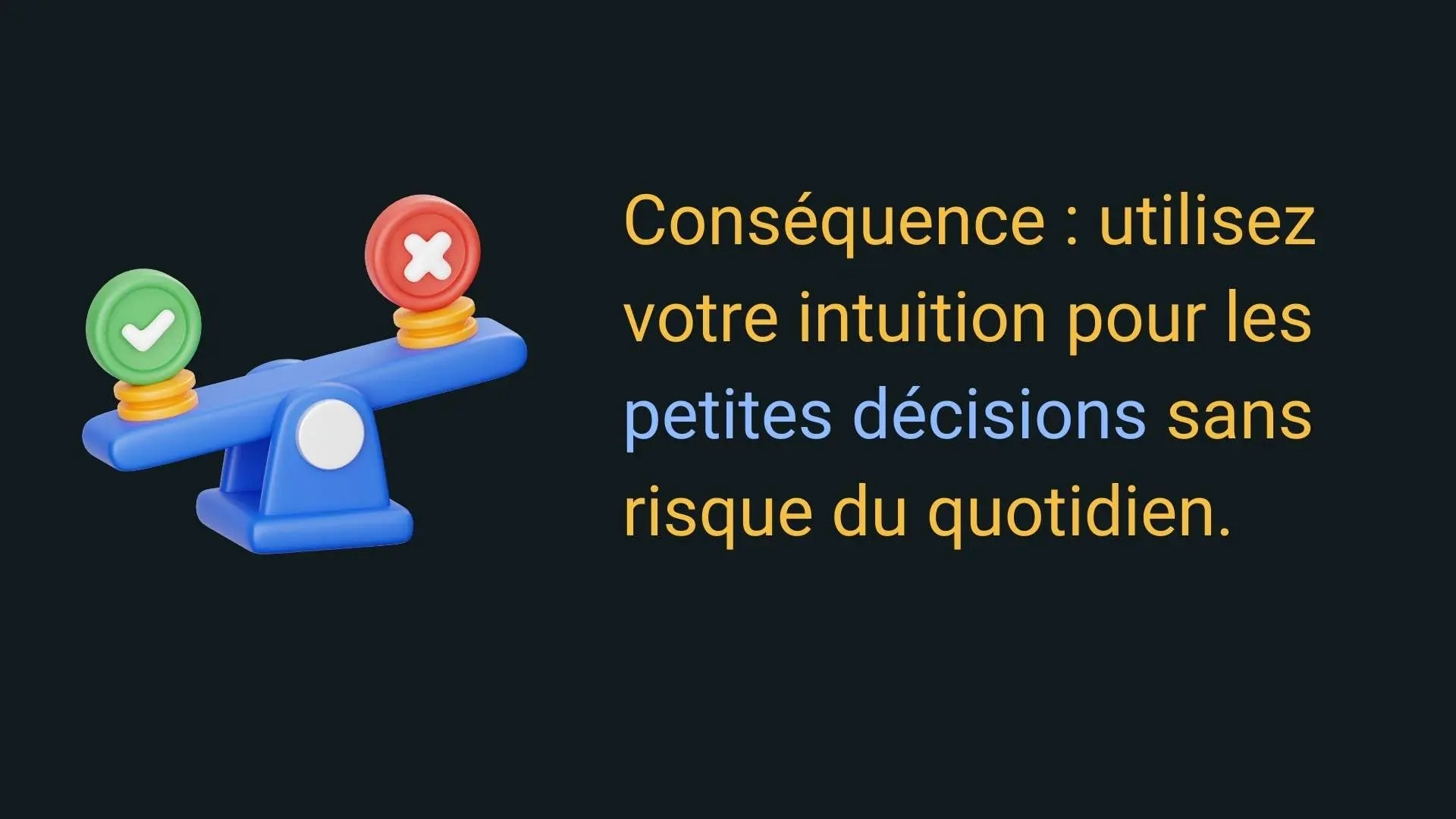
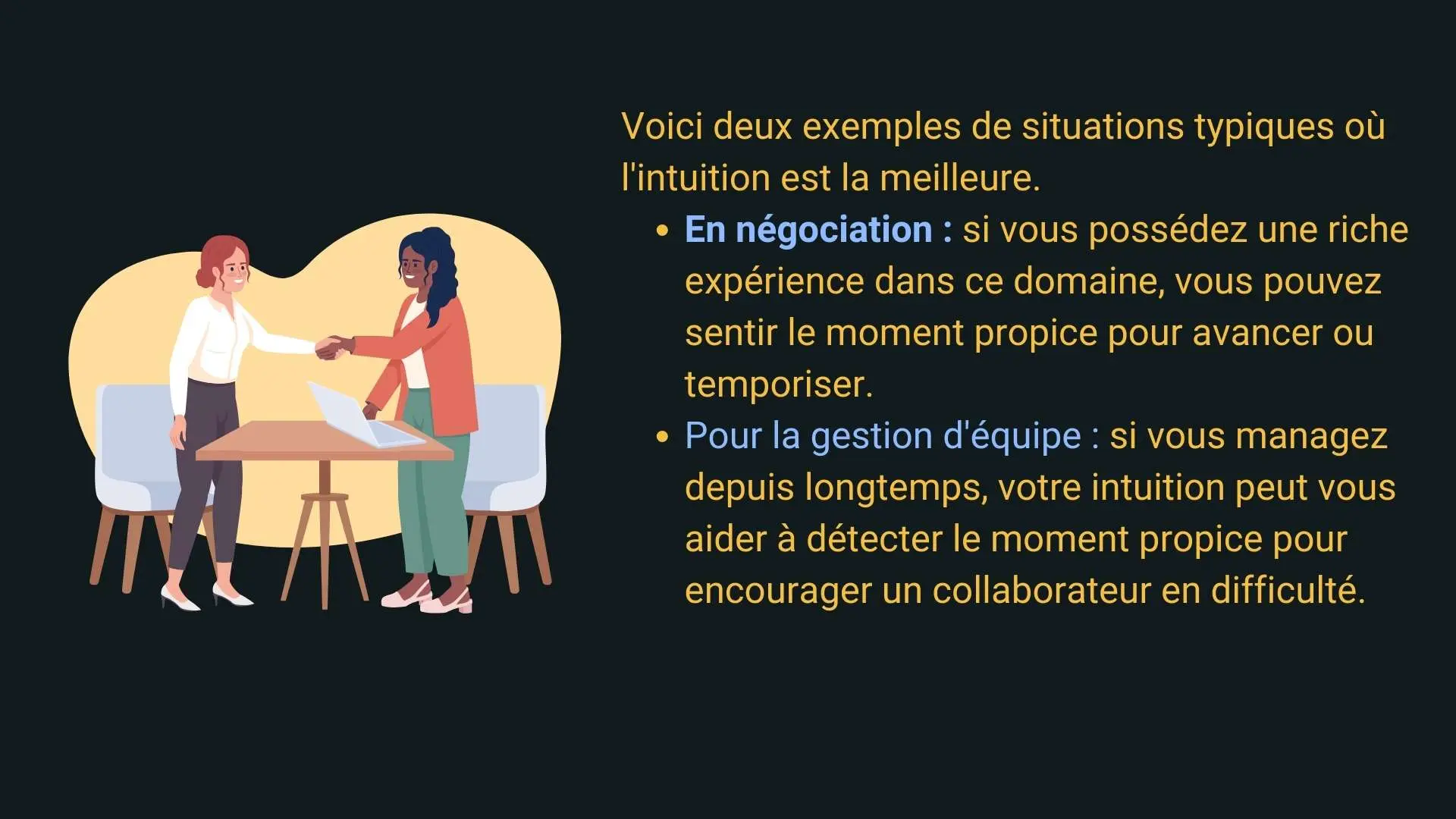
The strategic takeaway is to leverage intuition for low-stakes, reversible decisions in routine operations. Here are two typical scenarios where intuition excels:
- If you possess extensive experience in commercial negotiation, you can instinctively sense the ideal moment to press an advantage or pause.
- If you have managed teams for years, your intuition quickly detects when a team member is silently struggling and needs encouragement.
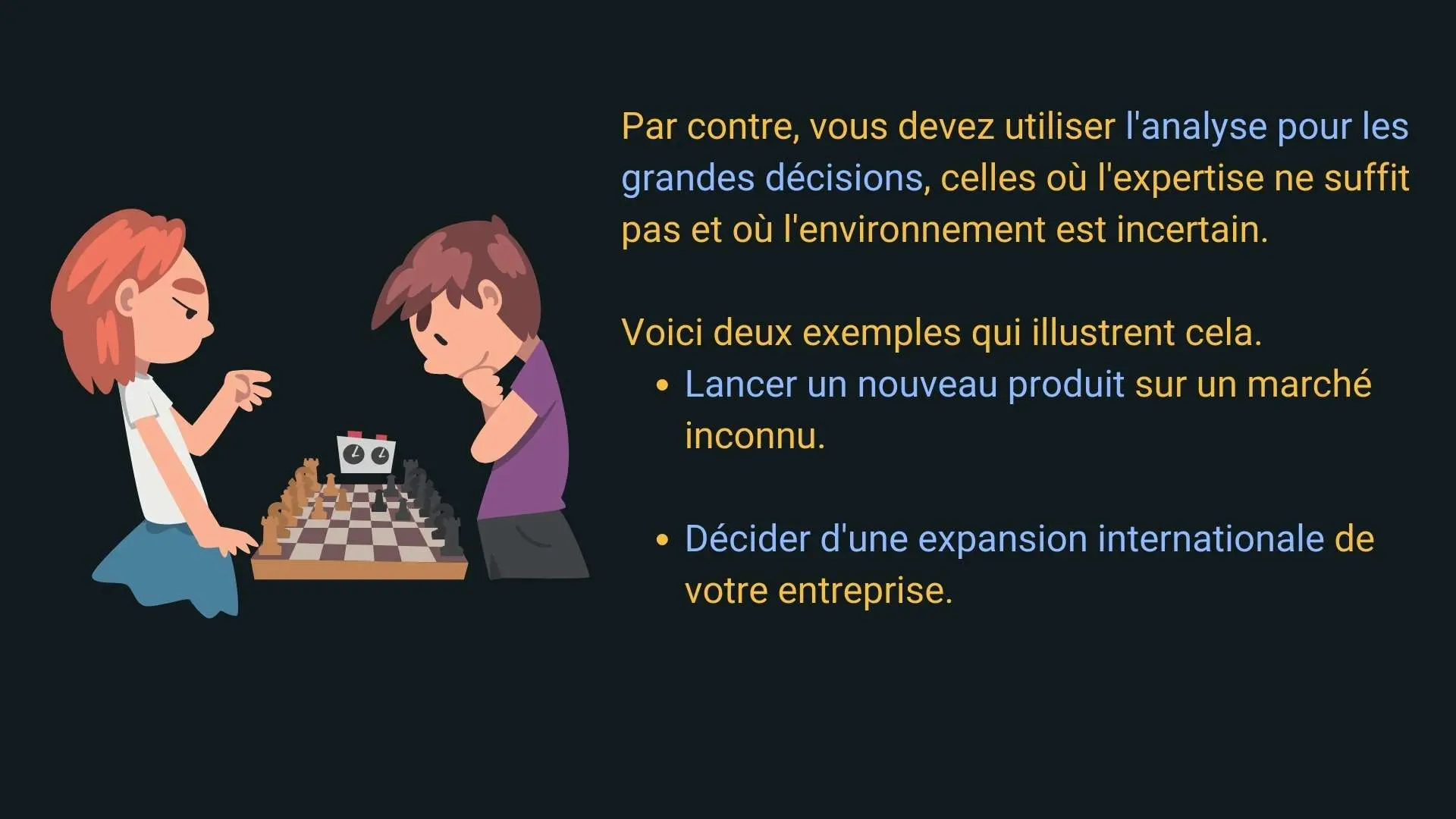
Conversely, you must enforce rigorous analytical scrutiny for high-stakes decisions—situations where prior expertise is insufficient and the environment is highly uncertain. Consider two classic cases:
- Launching a new product into an unfamiliar, unproven market.
- Deciding on an international expansion of your enterprise.
These transformative decisions involve complex variables that dwarf individual past experience. Moreover, their rarity across a career prevents leaders from developing reliable intuitive heuristics.
Before acting on gut instinct, ask yourself this foundational question: In this specific domain and for this decision, does my intuition rest on genuine, calibrated expertise? Whether your answer is yes or no, that honest reflection will dramatically elevate the quality of your decisions.
Conclusions and strategic recommendations
Dear entrepreneurs and managers, intuition is neither an infallible superpower nor an irrational flaw to be suppressed. It is one instrument among many in your strategic toolkit, whose utility depends entirely on your ability to evaluate its alignment with the problem at hand.
Navigate the vast sea of corporate decisions with wisdom, treating intuition as one of several compasses—while never forgetting to cross-reference your navigational charts.
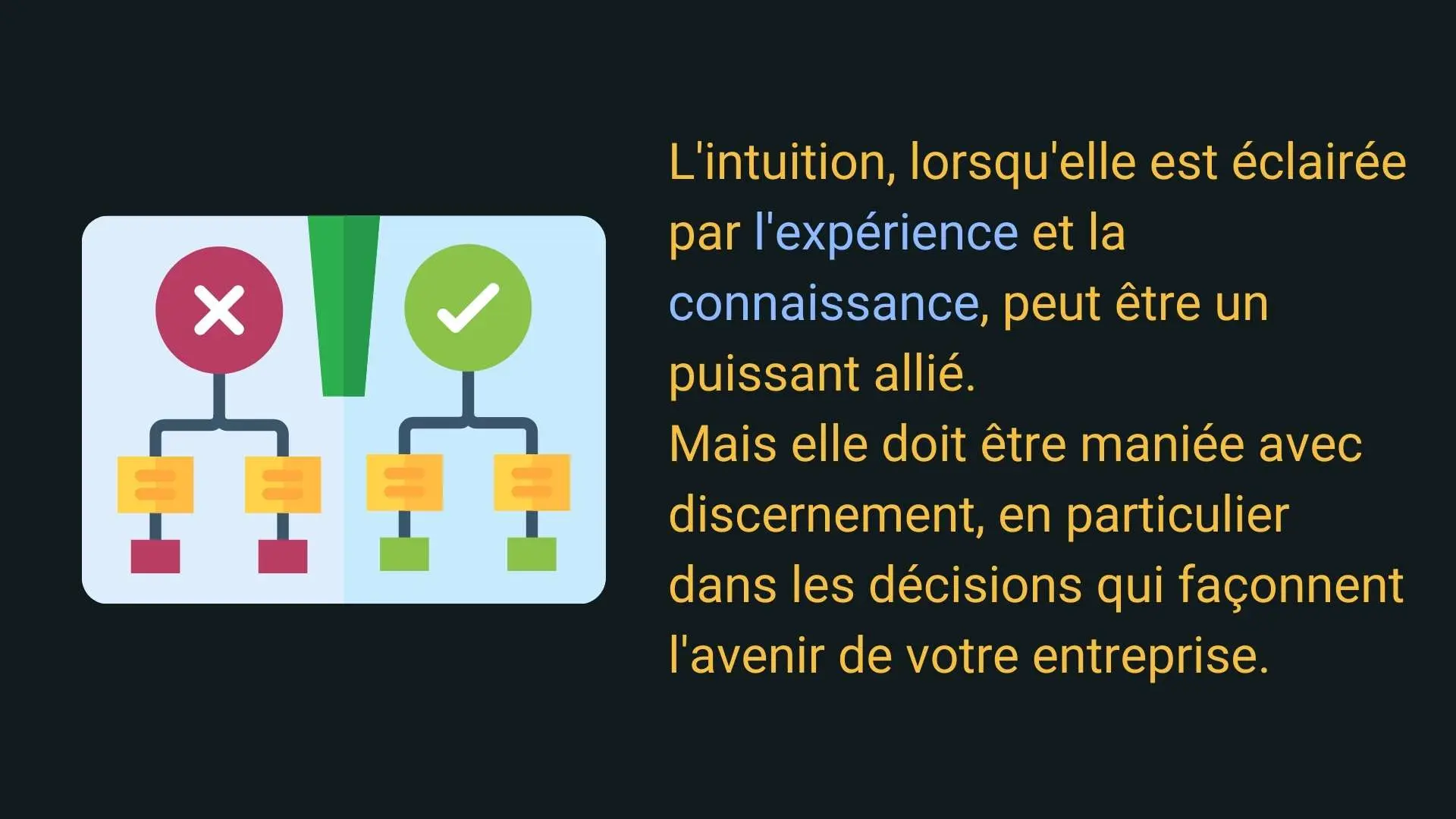
Intuition, when tempered by disciplined experience and sound data, is a formidable ally. But handle it with discernment, especially when charting decisions that shape the future of your company.
To all entrepreneurs and managers: how do you balance intuition and analytical rigor in your daily choices? Feel free to reach out and share your insights!
Quick quiz: intuition and strategic decision-making
Below are five questions and answers to test what you've learned from this article. Feel free to review them now or return later to refresh your knowledge.
What role does intuition play in managerial decision-making?
Intuition acts as a rapid heuristic when time is critical and exhaustive analysis is unfeasible. Validated by field research on chess masters and emergency responders, intuition is essentially automated expertise—pattern recognition calibrated through experience, especially potent in predictable settings with clear feedback loops.What are the two essential conditions required to trust intuitive judgment?
To rely on intuition effectively, two criteria must be satisfied: first, operating within an environment characterized by stable, predictable causal relationships; second, receiving swift and unambiguous feedback on the outcomes of one's decisions. These conditions ensure intuition reflects genuine expertise rather than subjective overconfidence.When should intuitive decision-making be actively avoided?
Intuition should be sidelined during high-stakes, novel, or irreversible decisions—such as entering unfamiliar foreign markets or launching unprecedented product categories. In these scenarios, variables and uncertainties outstrip personal experience, making analytical rigor and empirical testing indispensable.What key question should you ask before following a gut instinct?
Before acting on instinct, ask: "Does my intuition in this specific domain rest on genuine, verifiable expertise and a track record of similar experiences?" This reflection clarifies whether intuition is a reliable guide or an unjustified gamble.What is the overarching conclusion regarding intuition in business leadership?
Intuition is one valuable tool within a broader decision-making toolkit. Its effectiveness depends on context. Leaders must exercise cognitive discipline by balancing intuitive agility for routine operations with rigorous analytical validation for strategic turning points.If you found this article valuable, please share it on social media. If you'd like to explore decision frameworks for your teams, click below to start a conversation.