The road to hell is paved with good intentions in management

The adage "The road to hell is paved with good intentions" is a powerful warning: even the most noble actions can trigger perverse, counterproductive outcomes.
We will explore five historical and modern case studies spanning centuries that illustrate this phenomenon.
From the instability of British merchant vessels to cobra breeding in India and rat bounties in Vietnam, explore the Cobra Effect and systemic trade-offs.
 Author: Thierry P. Gaillard -
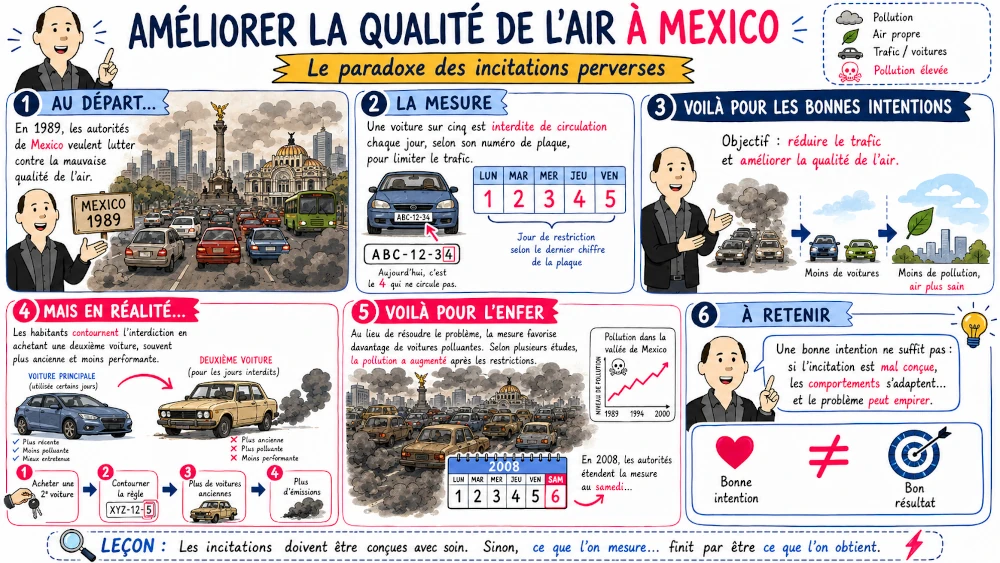
Merchant ship taxes in Great Britain
In the 17th century, the British government introduced a tax on merchant vessels based on their beam (width) rather than total volume, aiming to simplify port assessments.
In response, British shipbuilders began constructing vessels that were extraordinarily long and narrow to minimize taxable width while preserving cargo capacity.
The unintended consequence: these disproportionately narrow ships proved dangerously unstable in heavy seas. Hundreds of vessels capsized during North Atlantic storms, resulting in catastrophic loss of life and valuable freight. A well-intentioned fiscal simplification birthed lethal maritime hazards.
A tragic demonstration of perverse fiscal incentives.
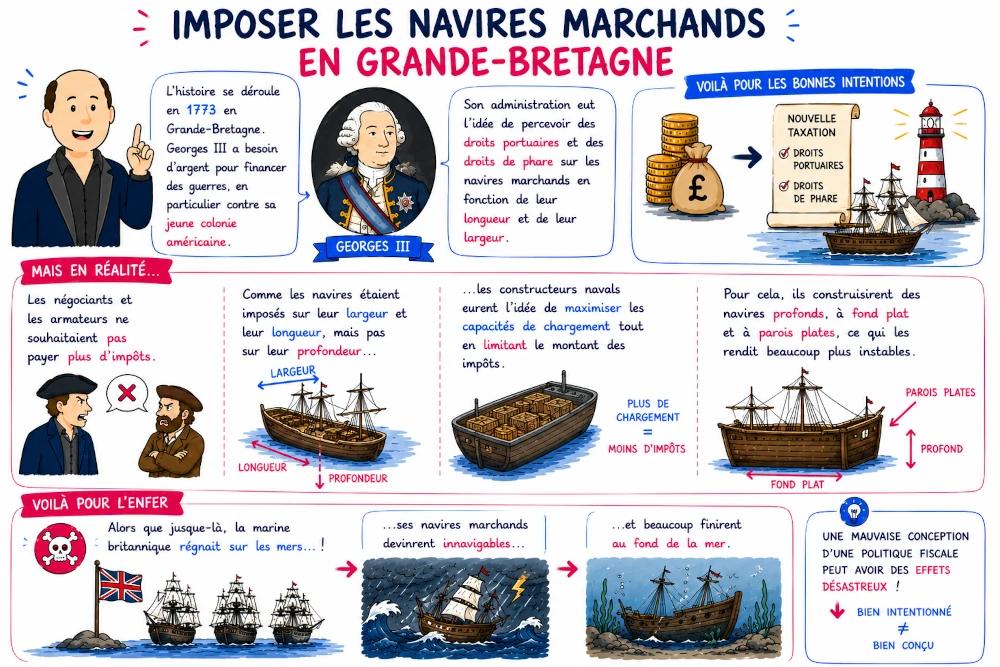

Exterminating cobras in Delhi, India
During British colonial rule in India, authorities grew alarmed by the large population of venomous cobras infesting Delhi. To eradicate them, the administration established a cash bounty for every dead cobra brought in.
Initially, the strategy seemed successful as bounty hunters turned in heaps of snake skins. However, enterprising locals quickly realized they could breed cobras in captivity to harvest rewards on demand.
When authorities discovered the scheme and terminated the bounty program, the breeders simply released their now-valueless cobras into the streets. The wild cobra population surged far higher than before the policy was instituted.
This classic episode famously coined the term Cobra Effect.
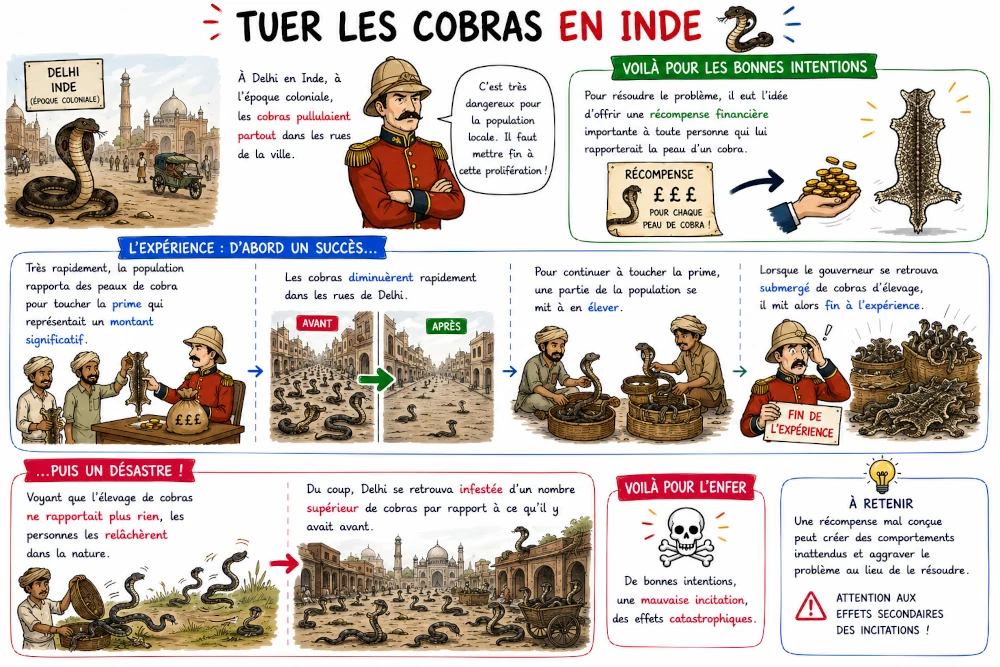
Eradicating rats in Hanoi, Vietnam
In 1902, French colonial administrators in Hanoi faced a rampant rat infestation in the city's newly constructed European quarter sewers. They hired professional rat-catchers and offered a reward for each severed rat tail delivered.
Soon, inspectors began noticing tailless rats running openly through Hanoi. Catchers were simply cutting off the tails and releasing the live rats back into the sewers so they could breed and guarantee future revenue.
The rat plague escalated dramatically, ultimately contributing to a severe outbreak of bubonic plague.
Good intentions, disastrous execution.
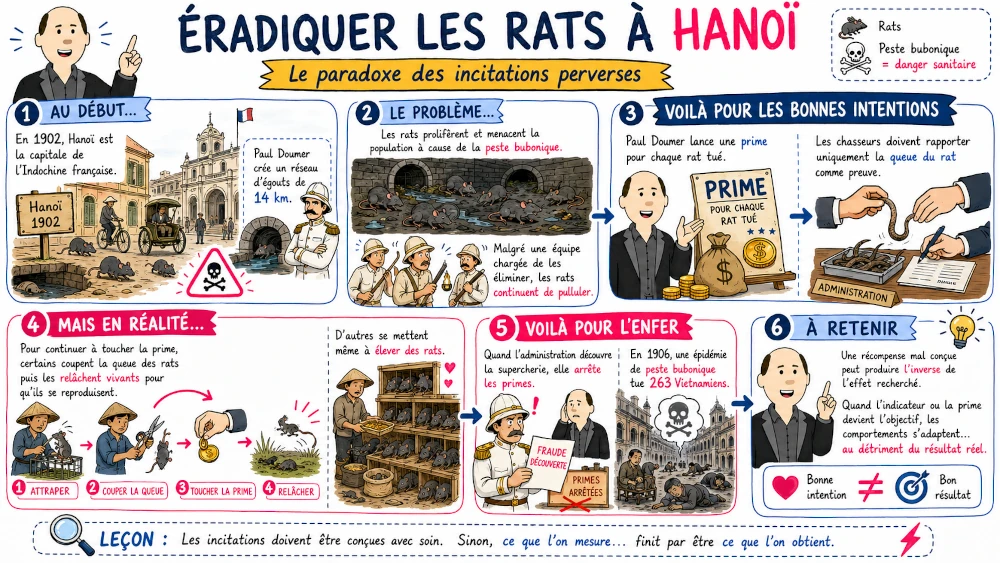
Improving air quality in Mexico City
In 1989, Mexico City launched the Hoy No Circula program to curb toxic air pollution by banning motorists from driving one weekday per week, based on the last digit of their license plate.
Instead of switching to public transit or carpooling, many households simply purchased a second, cheap used car with an alternating license plate number. These older secondary cars were far more polluting than their primary vehicles.
Air pollution levels actually worsened across the metropolitan basin, illustrating how rigid regulations trigger consumer adaptations that defeat policy objectives.
Another well-meant initiative paved with unintended friction.
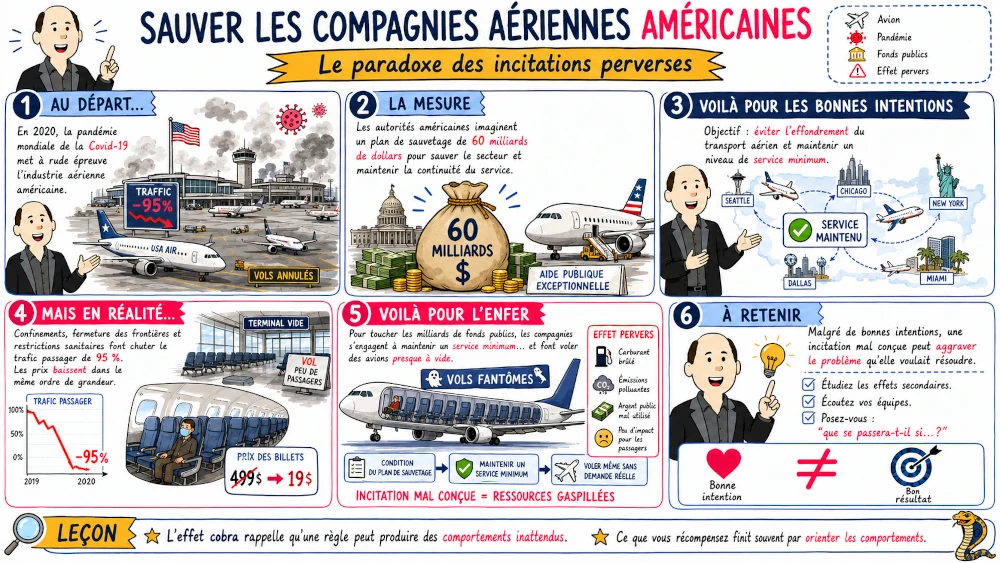
Bailing out US airlines during COVID-19
During the 2020 pandemic, the US federal government allocated over $50 billion in relief funds to airlines under the condition that they avoid mass layoffs and encourage early retirement packages.
Airlines aggressively bought out senior pilots, flight attendants, and maintenance engineers. But when air travel rebounded far faster than anticipated in 2021–2022, carriers faced an acute labor shortage.
The result was widespread flight cancellations, stranded travelers, and massive operational gridlock. A program designed to stabilize commercial aviation ended up paralyzing it.
And that completes our tour of good intentions.
Conclusions and strategic lessons
These historical case studies are not meant to discourage proactive leadership, but rather to highlight the critical necessity of thorough, systemic analysis before intervening in complex environments.
Here are key strategic lessons to remember:
- Acknowledge Systemic Complexity: Real-world systems possess multifaceted, non-linear interconnections that interact unpredictably. Strive to model these ripple effects before pulling operational levers.
- Anticipate Perverse Incentives: Incentives inevitably shape unexpected behaviors, often directly opposed to your overarching goal. Rigorously analyze how stakeholders could game proposed incentives.
- Exercise Intellectual Humility: No executive can predict every contingency. Acknowledge the risk of error, test small pilots, and pivot swiftly when signals shift.
The Cobra Effect reminds us that noble intentions never guarantee positive outcomes. By approaching strategic challenges with rigorous systems analysis, leaders can solve existing problems without inadvertently engineering new ones.