
Master 100% of the Google indexing pipeline
Publishing great content is useless if Googlebot cannot efficiently crawl, render, and index your URLs. Too many websites suffer from severe organic traffic losses caused by basic technical indexation failures.
Based on official Google Search Central engineering documentation and extensive crawl analysis, this guide explains exactly what happens behind the scenes from the moment Googlebot discovers a URL to its final inclusion in the search index.
This technical guide is essential reading for SEO professionals, full-stack web developers, and digital marketing leaders seeking to guarantee optimal indexing rates.
 Author: Thierry P. Gaillard -
Stage 1 Of indexation: raw HTML extraction and link discovery
Indexing serves as the foundation upon which Google categorizes and ranks the vast expanse of web pages. It consists of extracting words and phrases from the page and determining, through multiple signals, whether or not it deserves to be indexed.
Indexing begins with parsing the HTML content, during which Google meticulously repairs semantic errors it encounters, ensuring that HTML tags are placed in the proper location.
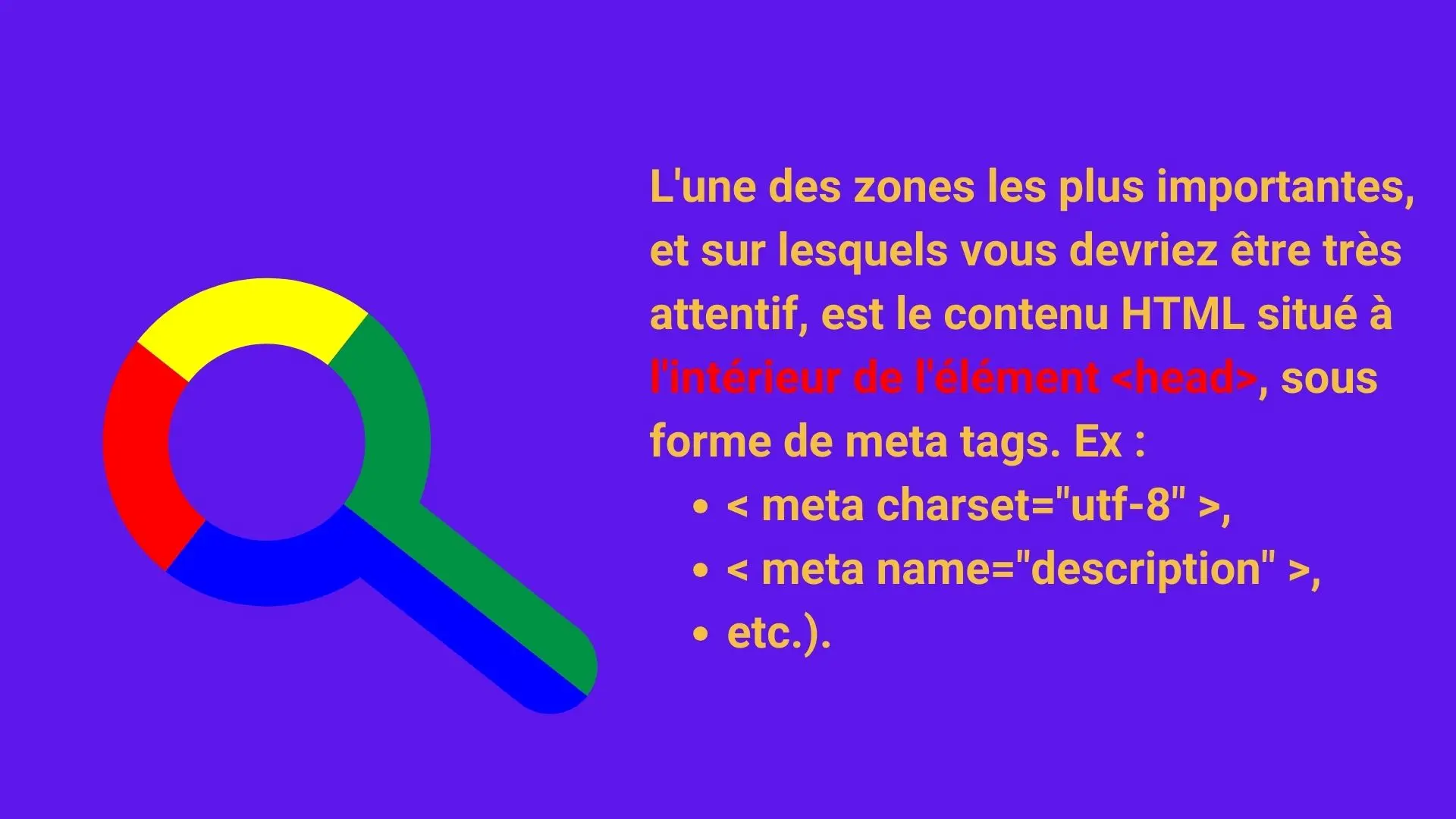
One of the most critical areas—where you must pay close attention—is the HTML content located inside the <head> element in the form of meta tags (e.g., <meta charset="utf-8">, <meta name="description">, etc.).
If crawlers encounter an invalid tag inside the head (e.g., <ul>), they will prematurely close the <head> element right before the unsupported tag. Any metadata located after that invalid tag will therefore be ignored for indexing.
I strongly encourage you to use the W3C Markup Validation Service to check your code's compliance and fix any errors.
Overview of indexing stage 1: HTML code analysis
Stage 2 Of indexation: duplicate content identification and clustering
When Google retrieves the main content of your page, it groups it with one or more pages that share similar content, if any are found. To do so, it uses a methodical approach based on multiple signals and then selects the canonical version—the version that best represents a cluster of duplicate pages. This process is called "duplicate clustering". Alternate pages may still be used in specific contexts to match targeted user queries.
The signals used to select the canonical page fall into two categories:
- Direct hints provided by website owners who place a rel="canonical" tag inside the page's <head> element. However, this is treated as a hint rather than a strict directive and is not always followed.
- More complex indicators, such as the individual authority and prominence of a page. These indicators are part of Google's secret sauce, about which it reveals little.
The concept of "duplicate clustering" is fundamental because it determines how effectively your site satisfies user search intent.
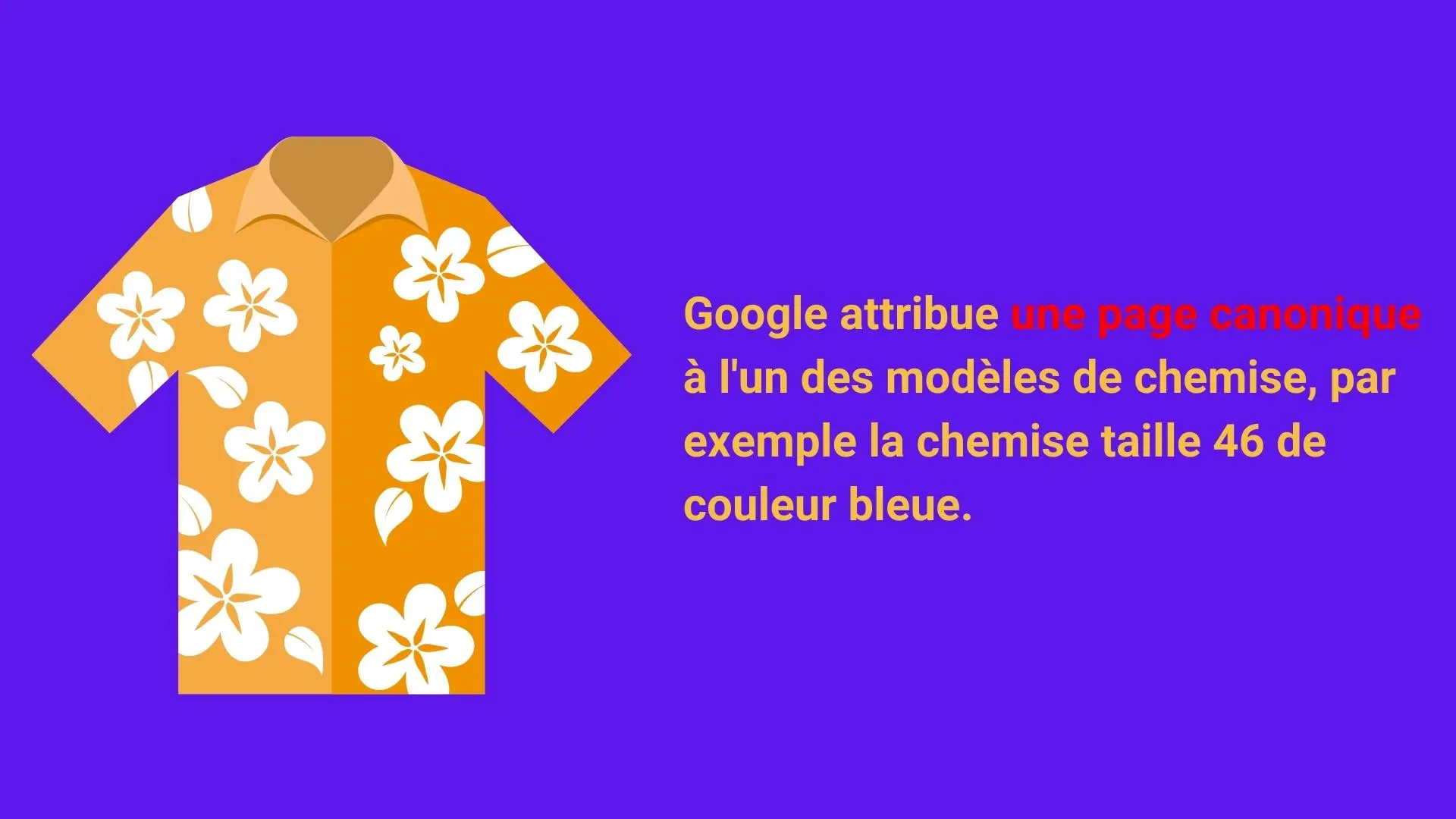
Imagine, for example, that your website sells shirts. A shirt cluster is a group of different URLs showcasing the same shirt model with varying attributes such as color, size, etc. Google assigns canonical status to one specific shirt URL—for instance, size 46 in blue.
If a user types a query to buy that shirt specifically in yellow, the specific variant page for the yellow shirt will appear in search results rather than the canonical page. Google's search algorithms can select that variant URL to display in search results when it more accurately matches a user's query.
Understanding this mechanism is vital to avoid the common mistake of applying a "Noindex" directive to variant pages in an attempt to prevent duplicate content. That mistake stems from a misunderstanding regarding supposed duplicate content penalties and keyword cannibalization, where site owners fear similar pages will compete against each other in search results and dilute their ranking potential.
However, preemptively removing these variant pages from the index using the "Noindex" directive can be counterproductive. In many cases, those specific variant pages are the most relevant search results for detailed search queries, improving the user's search experience by taking them directly to the exact product variant they want.
When I work on e-commerce websites offering products with multiple variants, I cluster the variant pages into a dedicated directory structure and place a canonical tag on all variant pages pointing to a single master version of the product—without adding any "Noindex" directive.
Overview of indexing stage 2: duplicate content identification








Stage 3: canonical URL selection and cluster indexation
The decision to index a page depends on its quality and the signals previously gathered at the time of discovery. Once a canonical page is deemed worthy of inclusion, its information and its cluster are stored in Google's extended index—a massive database distributed across thousands of servers. This database is engineered to return highly relevant results in response to user queries.
Overview of stage 3: indexing the canonical page and cluster
Technical conclusions: ensuring 100% indexation health
Understanding Google's indexing pipeline is crucial for anyone seeking to optimize content for search engines. By ensuring your web pages are properly structured and your content is unique and valuable, you can significantly improve their visibility and relevance in Google search results.
To achieve this, you must apply a surgical approach to SEO and content indexing. Rather than adopting blanket rules that might inadvertently hide valuable content from search engines, it is crucial to evaluate the specific context and search relevance of each individual page.
In an upcoming article, I will explain from a technical perspective how Google processes user queries and delivers relevant search results.
Conclusions on Google indexing



Authoritative Google documentation & references
- Google Search Central - How Google Search indexes pages.
- Google Search Central - Search Engine Optimization (SEO) Starter Guide.
- Google Search Central - Google Search Essentials.

About the author:
Thierry P. Gaillard - End-to-end digital project management
After working at American Express for 15 years—including six years as an IT project manager and eight years as director of a 100-person profit center—Thierry P. Gaillard became a web entrepreneur, digital marketing manager, and e-commerce specialist.
His areas of expertise include web performance, branding, commercial negotiation, and management.