What criteria actually determine whether an AI chatbot mentions a brand?
Put an end to marketing waste by discovering the real factors that drive each AI chatbot to recommend your competitors rather than your offerings.
If you’re certain that you can appear in AI chatbot responses, you should reconsider your position.
As a digital marketing manager with several years of SEO experience, I find it regrettable that many French small and medium-sized businesses are wasting their marketing budgets based on myths and claims not supported by data.
Neil Patel, a successful American marketer, led a study that analyzed 9 million AI responses from more than 400 corporate brands. The resulting data is undeniable.
 Author: Thierry P. Gaillard -
What matters is that people are talking about you.
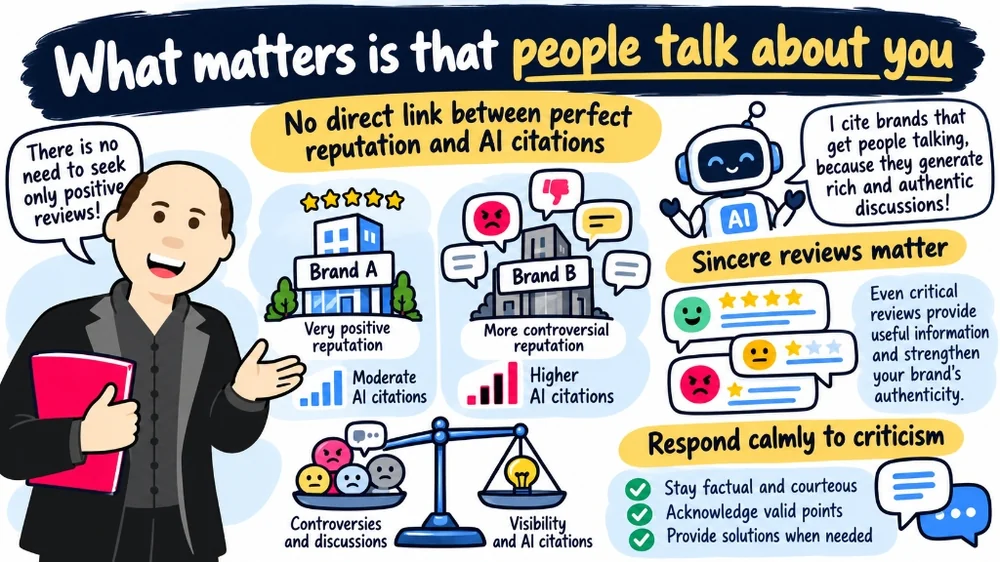
First of all, the study found no positive correlation (let alone causation) between a brand’s reputation, excellent customer reviews, and its AI mention rate. In fact, the opposite is true: controversial brands perform better than those that receive nothing but praise, likely because AI perceives this as a sign of authenticity—you can’t please everyone.
Create informative, objective, and comprehensive content.
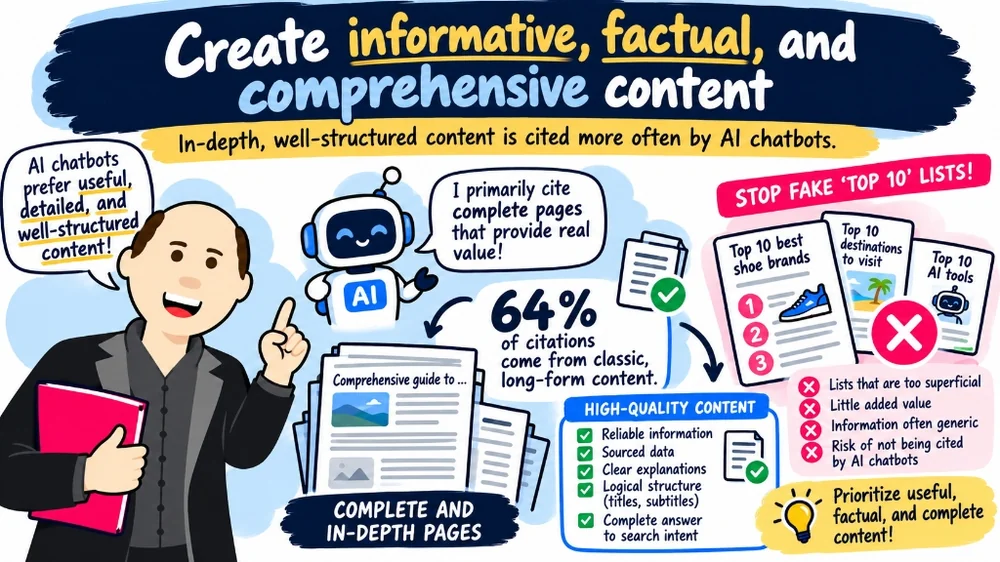
According to him, 64% of citations come from traditional, long-form content pages, relegating “listicles”—that is, articles featuring completely bogus “top 10” lists—and comparison pieces to the background.
It’s high time you stopped resorting to cheap tricks that AI can easily detect and instead focus on producing informative, objective, and comprehensive content.
Working with Third-Party Platforms.
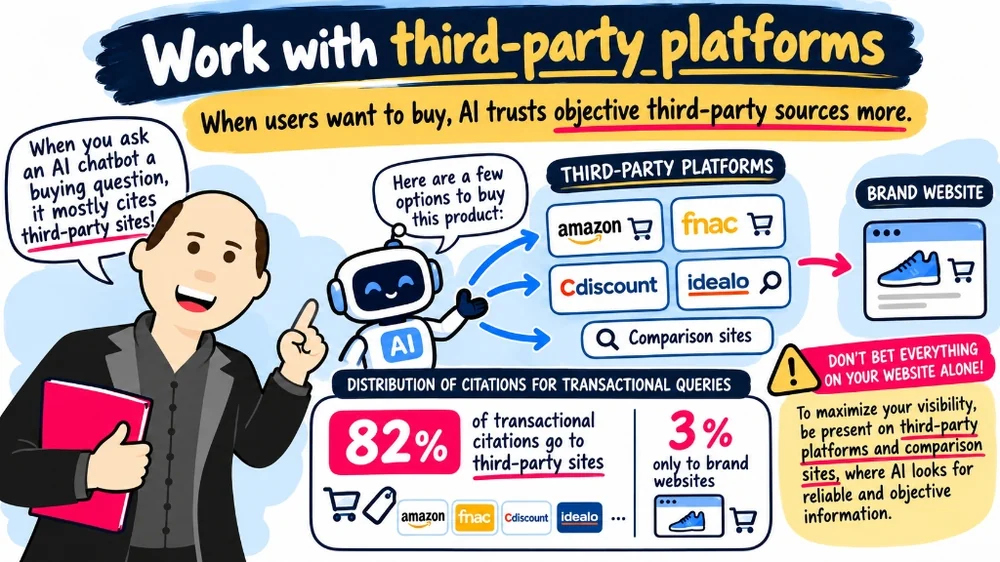
For queries that indicate a transactional or commercial intent, 82% of results link to third-party sites and only 3% to the brands’ own websites (compared to 13% for navigational and informational queries).
This means that when a prospect asks an AI chatbot about purchasing a product or service, third-party sites are seen as more credible than your own website for selling your products or services because they are perceived as more objective.
The implication for you: don’t allocate your entire marketing budget to your own websites; instead, make sure your products and services are promoted on third-party platforms.
YouTube and LinkedIn are must-haves.
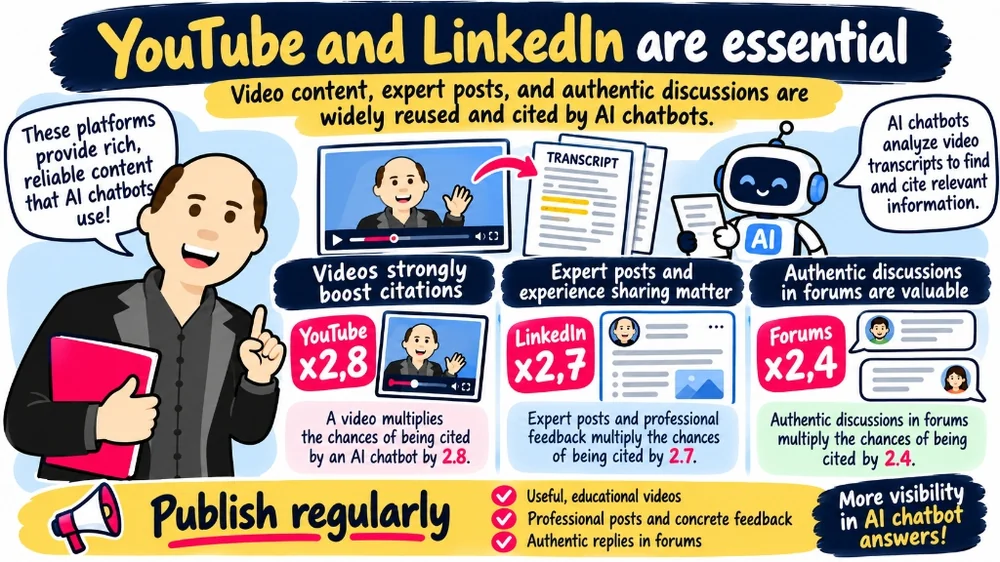
Furthermore, YouTube is the preferred channel for chatbots that scrape video transcripts. The numbers speak for themselves: a YouTube video increases your chances of being cited by AI by a factor of 2.8 compared to a simple article.
Expert posts and professional insights on LinkedIn increase your chances by a factor of 2.7. Authentic discussions between users on Reddit-style forums increase your chances by a factor of 2.4.
This means you need to allocate a substantial budget to post videos on YouTube regularly and frequently. Use full transcripts, descriptive titles, and be sure to cover topics that appeal to your prospects.
Invest in Your Own Website.
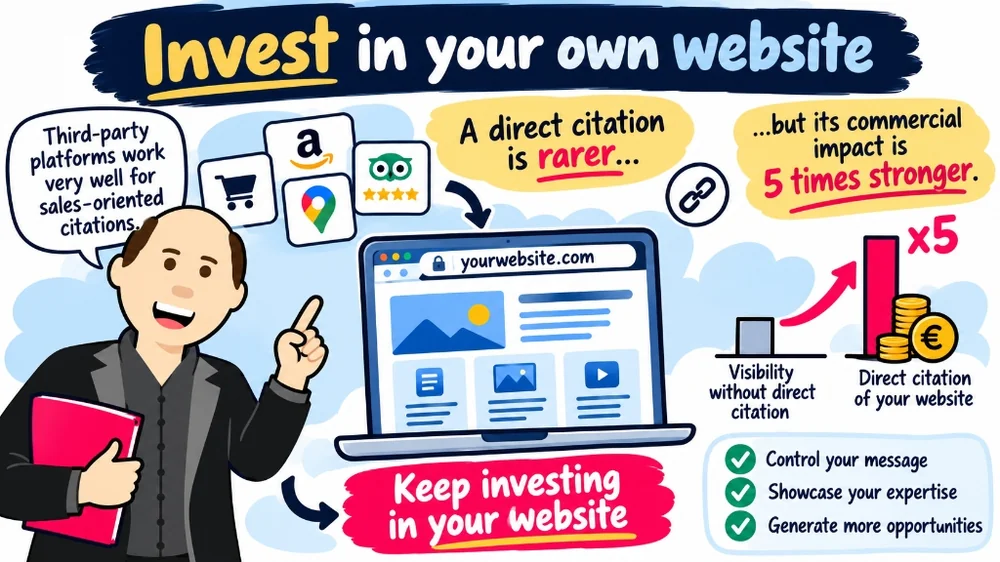
Just because third-party platforms outperform you when it comes to selling your product or service doesn’t mean you should give up on your website.
Admittedly, getting a direct mention from your own site is rarer and more difficult, but when it happens, the commercial impact is five times greater than the average visibility rate of a brand that doesn’t receive any direct mentions from its own site. That far exceeds YouTube!
For you, this means you should continue to invest in your website and create content that addresses the search queries that, according to the data, are already generating citations.
A mention isn’t a trophy.
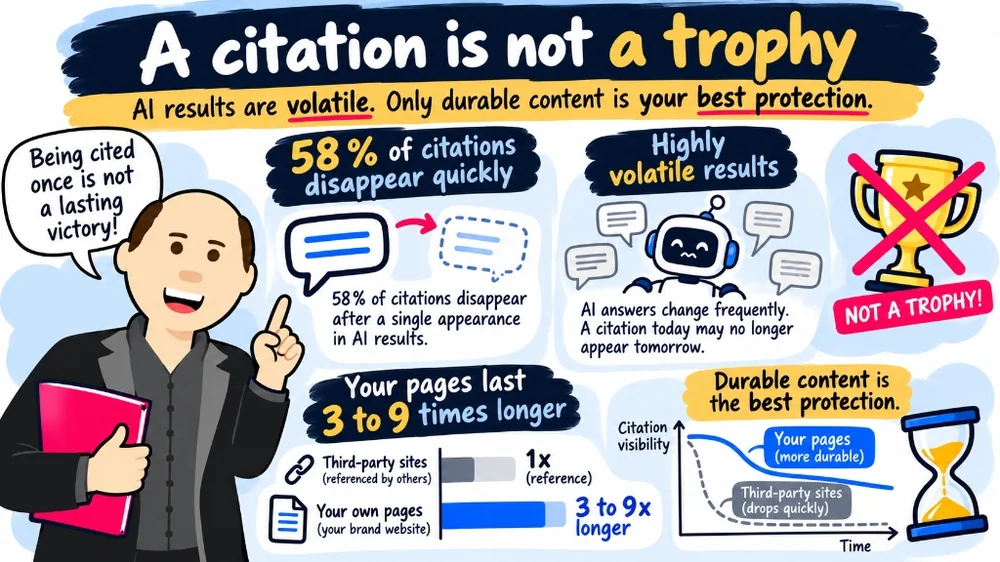
But if you’re mentioned once by an AI chatbot, don’t claim victory just yet—and don’t pop the champagne! The study reveals that 58% of mentions disappear after a single appearance. If another user makes a new request five minutes after yours, the AI rephrases its response, searches for other sources, and completely forgets about you.
Most mentions in AI are just fleeting strokes of luck, not a guaranteed position. But these mentions linking to your web pages have a lifespan 3 to 9 times longer than those from third-party sites.
This means your content remains your best bet because it’s the only thing that stabilizes your presence over time. Don’t neglect it!
Getting a mention doesn’t strengthen your brand.
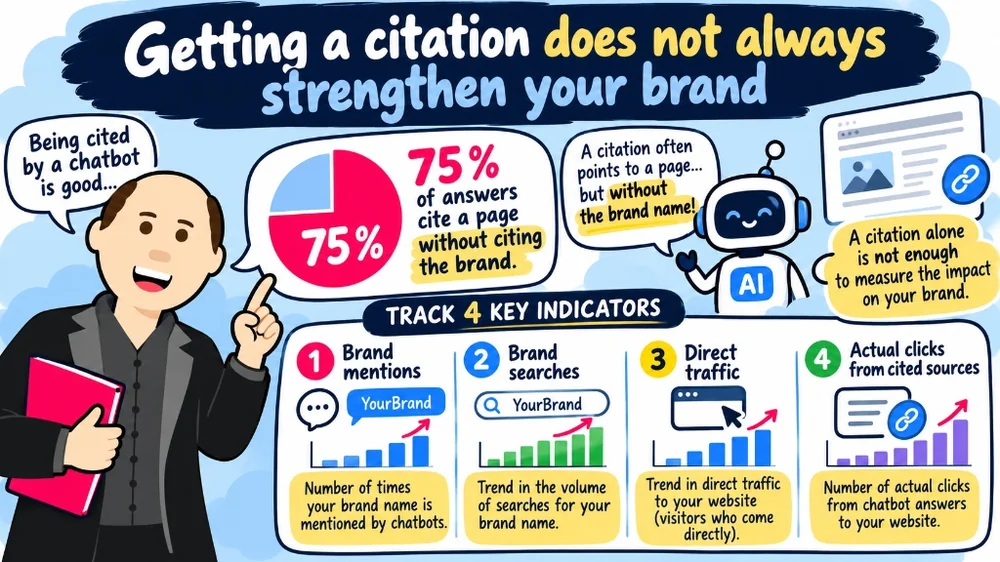
75% of responses that reference a brand’s page never mention its name. AI chatbots use your content and data to craft their responses, but they don’t mention your brand.
Here’s what you need to do:
- Track how many times your brand name appears in chatbot responses.
- Check whether users are typing your brand name more often in search results.
- Monitor whether direct traffic to your website is steadily increasing.
- Determine whether users actually clicked on the source to visit your site.
As long as these four metrics aren’t improving, accumulating mentions in AI-powered search engines won’t generate any additional revenue.
What You Need to Do.
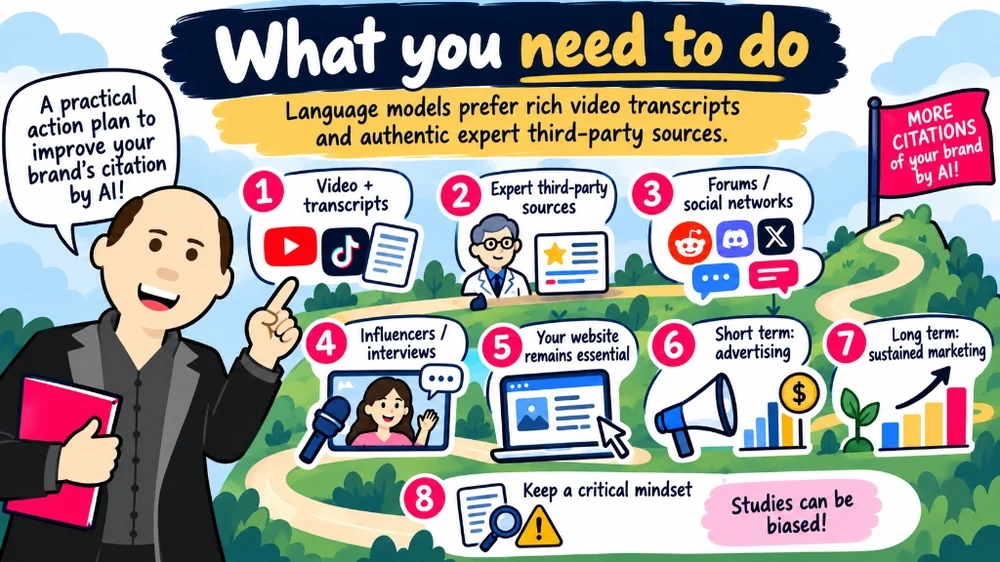
Language models favor rich, structured video transcripts, as well as authentic, expert third-party sources, rather than someone who exclaims, “I’m the best.”
The volatility of results depends on your brand’s overall authority, far more than on any kind of short-lived gimmick. You also need to maintain your website and create content that answers users’ queries.
The action plan is fairly simple: launch your YouTube or TikTok channel, start a podcast, help users on forums or social media without promoting your brand, and make sure people are talking about you and your products.
You can also form partnerships with influencers—in the broadest sense—or find ways to get them interested in you. For example, a ten-minute interview on Silicon Valley Girl is worth its weight in gold for anyone working in the digital industry!
If you want quick results, buy ads on a chatbot or social media platform. Be sure to set aside a substantial budget for this.
But if you want to use marketing effectively, the medium- and long-term approach is the only way to get responses from AI chatbots.
P.S.: Be careful! You shouldn’t rely 100% on this type of study either. They’re often subject to bias, flawed methods, and correlations rather than causation. They aren’t peer-reviewed before publication and aren’t subject to any methodological requirements.
But in this case, I agree with many of the points it raises. That doesn’t stop me from keeping a cool head and thinking critically.