
Buyer personas: methodology and tools to build your ideal customer profiles
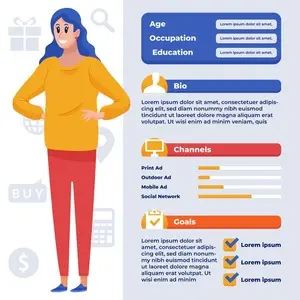
Attempting to speak to everyone in marketing is the guaranteed recipe to speak to no one. Buyer personas—semi-fictional representations of your ideal customers grounded in real qualitative and quantitative data—are the linchpin of high-converting campaigns.
Too many organizations rely on generic assumptions or superficial demographic checklists. Real personas capture customer motivations, emotional friction, buying triggers, objections, and decision-making criteria.
This authoritative guide breaks down the history, psychology, qualitative interview questionnaires, and data synthesis workflows needed to construct transformational buyer personas.
Remember: the hardest part is simply getting started.
 Author: Thierry P. Gaillard -
What is a buyer persona? Core definitions and value proposition
In digital marketing, a buyer persona is a semi-fictional ideal customer profile that represents a group of real people who share similar buyer characteristics.
These individuals share common expectations, needs, and buying behaviors. They exhibit analogous traits, such as similar lifestyles, comparable attitudes, and a shared worldview and way of experiencing products and services.
A man always has two reasons for doing anything: a good reason and the real reason.J.P. Morgan
The history and evolution of personas: from Alan Cooper to modern marketing
In the 1970s and 1980s, software developers tended to design programs that appealed to themselves, but were not always suited to end users: overly complicated, packed with too many features, and taking far too long to learn.
Alan Cooper, the software pioneer behind the Visual Basic programming language, created the persona method in 1999. Its core premise was to design software around the end user rather than the developer's personal preferences. With the rise of the digital economy, these personas evolved into essential marketing tools across industries far beyond software engineering.
Personas are designed to avoid the classic trap of building a product or service that tries to appeal to everyone and ends up pleasing no one. Instead, you tailor your offering to a targeted audience with known expectations, communicating with the right tone, the right language, and the right message at the right time. Your teams then work in unison toward the exact same objective.

How to interview real customers to build empathetic persona profiles
I strongly recommend interviewing some of your customers yourself, because nothing replaces direct human contact, intuition, and the unspoken nuances you pick up through a gesture, a facial expression, or a word choice. Do not limit yourself to standard satisfaction surveys that are all too often self-centered around your company. Creating personas requires a deeper commitment:
- Take a genuine interest in your customers: ask them how they spend their free time, what kinds of activities they enjoy, or what their professional aspirations are. Try to understand what worries them and what "succeeding in life" means to them. Seek to uncover their core personality, their aspirations, and their attitude toward life. Find out what they absolutely cannot live without (car, smartphone, etc.).
- Measure satisfaction interactively: ask your staff to systematically complete surveys together with your customers (rather than leaving them alone to tick boxes, as is frequently the case) by asking about their tastes, motivations, and dreams. What attracted them to your product, what displeased them (even seemingly minor details), what did they expect, and how could you improve their experience?
- Have them describe a typical day: how do they commute to work? What are their hobbies? Where do they go on vacation? What motivates them in the morning? What do they eat? How much time do they spend at home? What do they do when they have free time? Assemble a tailored set of questions that relate to your business.
- Identify their "digital connectivity": how do they use the Internet and digital tools? Heavy power users or casual browsers? Desktop computer or smartphone?
- Take the time to observe them: watch them use your solution firsthand to understand what more you could do for them.
Does this sound intrusive? Not at all. My personal experience has shown that people love it when someone takes a sincere interest in them and takes the time to listen. That is why you won't even need to pay them: they will be delighted to talk with you as long as you are flexible when scheduling the interviews.
You can supplement your findings using satisfaction surveys and CRM tools, while keeping in mind that these sources often focus solely on the relationship between your solution and the customer, whereas personas focus on the whole person.
Feel free to also draw on demographic and consumer research institutes (such as Pew Research, national statistics bureaus, industry observatories, etc.) to enrich and refine your profiles. Browse social media networks as well—they are an inexhaustible source for understanding your target audience's aspirations: a few authentic comments or personal posts often reveal far more than any formal survey.
Synthesizing qualitative data into actionable persona architecture
To build your buyer personas, several tools are available. Here is a non-exhaustive list highlighting the ones I personally use:
- Creating persona profile sheets: my favorite tool is HubSpot's Make My Persona, because it is easy to use and free. Other solid options include Xtensio or Sowaycom, which builds buyer personas through a guided questionnaire. Userforge is also very user-friendly and lets you create your buyer persona card in just a few clicks.
- Analyzing web user behavior: I primarily use Google Analytics, though alternatives like Adobe Analytics also exist. They are essential for gathering quantitative data such as user behavior, conversion rates, and customer acquisition cost.
- Managing customers with a CRM (Customer Relationship Management): the solution I use is HubSpot CRM, because it is free, effective, and ideal for SMBs. Other renowned platforms include Salesforce. They help you segment your existing customer base, providing valuable insights for persona creation.
- Conducting market research: today, it is possible to carry out market studies at a controlled cost. My preferred provider is Creatests, a French firm based in Lille that I have known for several years. They offer full-service surveys managed from A to Z by their experts or, for a more modest budget, a Do-It-Yourself option.
- Running online surveys: my preference goes to SurveyMonkey, which makes it easy to send free online surveys directly to your customers or prospects.
- Applying the Jobs-to-be-Done framework: this approach focuses on the underlying tasks your customers are trying to accomplish, offering a unique perspective for building personas rooted in real needs and objectives.
- Analyzing socio-demographic data: platforms like Facebook Audience Insights can provide information on the age, gender, and other demographic characteristics of your audience, though I admit I rarely use it myself.
- Speaking with internal stakeholders: while direct customer interviews are indispensable for persona quality, talking with sales teams, customer support, and executive leadership can also enrich your understanding of buyer personas by integrating diverse expert viewpoints.
By combining several of these tools, you can obtain a much sharper picture of your buyer personas, enabling you to personalize your marketing and communication strategies effectively.
Carefully craft and humanize your persona profiles
Creating your personas is not an optional marketing exercise. They prevent the trap of broad-brush generalization that causes your messages and services—however good they may be—to miss your customers. They allow you to communicate appropriately with your target audience using the right language, strengthening your presence with the right message at the right time while keeping all your teams aligned.
However, creating personas is not an end in itself: you will need to refine your profiles over time, correct mistakes, and create new ones. Nor is it an exact science—can anything truly be when dealing with human beings? Still, it has the tremendous advantage of enabling you to better target your actions using your teams' knowledge and the data you collect, which will improve both your conversion rates and customer satisfaction.
At this stage, you have a wealth of information. Using the tools mentioned above, create a representative persona based on the common answers provided by a group of people. This will naturally lead you to create several personas with distinct profiles. For each one, imagine what their social media profile might look like: likes doing this, dislikes that, and so on.
Use the responses to outline their personality traits, goals, tastes, and habits. Assign them a representative photo and give them a first and last name. You can even give them a defining quote that matches their mindset to make them feel even more realistic (while remaining fictional characters).
- Antonin, computer science student: "I love affordable getaways with friends."
- Lionel, freelance consultant: "When traveling, I love meeting new people."
- Anne, private-practice physician: "I travel with my family to the ends of the earth."
Map out every customer touchpoint across the journey
Now that your personas are ready, it is time to precisely map their interactions with your brand throughout the customer experience. The goal is to accurately catalog the different moments when your personas will interact with your brand so you can handle each touchpoint in the best possible way for every profile.
This begins long before the sale, through advertising or outreach: try to imagine where and how your prospects will discover your brand and solutions. Next comes the moment when your personas find your company through your website, physical store, or social media pages: provide relevant, high-quality information and make the purchasing process seamless.
Finally, there is post-purchase interaction: satisfaction surveys, online reviews, email follow-ups, and more. At every touchpoint, your business must strike the right tone, level of involvement, and responsiveness that each of your personas expects. Best of all, it becomes very easy to share this roadmap across your teams so they can unite their efforts—from R&D to after-sales support—to meet your personas' needs and delight your customers.
Example of touchpoint mapping
A boutique hotel in the Drôme region of France wants to sell "romantic weekend getaway" packages. The target persona is Florence, a woman in her early forties living in Paris, married with two children, a senior finance executive who enjoys taking occasional weekend trips for two "to rekindle the spark and focus on ourselves."
The hotel identifies the different touchpoints with this persona:
- Florence spots the hotel's website in an advertisement in a financial newspaper.
- She immediately visits the hotel's website on her smartphone.
- She chats with the hotel website's chatbot to get specific details.
- She finds the package tailored to her profile and desires (romantic weekend getaway).
- She places a free option hold on the hotel room for two nights.
- That evening, after discussing it with her husband, she logs on from her computer, retrieves her booking file, pays online, and purchases the package.
- She receives an initial confirmation email from the hotel asking her to fill out a quick questionnaire about her preferences.
- A concierge representative calls her to discuss her preferences and offer to book additional services (show tickets, restaurants, guided tours, etc.).
- 48 hours before her arrival, she receives another email reminding her of her reservation details and providing practical information (weather forecast, driving directions, etc.).
- On arrival day, she travels to the hotel with her husband and spends the weekend on-site.
- During the stay, a guest relations manager takes the time to ask her and her husband about their impressions of the stay.
- A few days later, the hotel invites her to leave a review on the hotel's website.
With your teams, you should describe the emotions your persona experiences during each interaction with your brand, reflect on how your products and services provide the right solution, speak with the right tone, build tailored personalization, and deliver it with impeccable timing.
Measure risks and avoid common mistakes
When creating and using buyer personas in digital marketing, several mistakes and risks can arise.
- One of the most common mistakes is basing personas on stereotypes or unfounded assumptions rather than empirical data. This can lead to targeting errors and ineffective marketing campaigns.
- Furthermore, failing to update personas regularly can also be problematic, as consumer needs and behaviors evolve over time.
- It is also common to see companies create personas that are either too generic—failing to capture the nuances of customer segments—or overly specific, making them difficult to integrate into broader marketing strategies.
- Finally, there is a risk in failing to integrate personas across the entire customer journey, which can result in a fragmented user experience and friction points.
To avoid these pitfalls, it is essential to adopt a data-driven approach, review your personas regularly, and integrate them holistically into your marketing strategy.
Evaluate the effectiveness of your buyer personas
Measuring the effectiveness of using buyer personas in your digital marketing strategy is crucial to justify the investment of time and resources. Several KPIs (Key Performance Indicators) can be used for this evaluation.
Conversion rate by persona
- Importance: assesses the targeting effectiveness for each buyer persona.
- Method: compare the number of conversions to the total number of visitors for each persona segment.
Customer acquisition cost (CAC)
- Importance: indicates the profitability of your marketing efforts for each customer segment.
- Method: calculate the total cost of marketing campaigns divided by the number of new customers acquired, segmented by persona.
Qualitative engagement metrics
- Importance: provide a more complete picture of customer engagement and satisfaction.
- Method: engagement rate, time spent on site, and bounce rate.
Customer surveys and interviews
- Importance: provide direct data on customer satisfaction and preferences, helping refine the personas.
- Method: use online questionnaires or in-person interviews to gather feedback.
Before-and-after comparison
- Importance: measures the real impact of implementing buyer personas on business performance.
- Method: evaluate the KPIs mentioned above before and after introducing personas to measure changes.
By combining these indicators, you can perform a multi-criteria evaluation of your buyer personas' effectiveness, allowing you to adjust your strategy in a more informed way.
Replicate our practical case study
Context: creating a buyer persona on behalf of a travel agency.
Study objective
Understand the needs, preferences, and behaviors of potential customers to refine marketing and sales strategies.
Methodology
- Use of Google Analytics to track online visitor behavior.
- Analysis of social media interactions.
- Market research via Creatests.
- Interviews with sales teams and travel agents.
Collected data
- Average age: 25–40 years old.
- Gender: 55% female, 45% male.
- Preferred travel types: adventure trips, romantic getaways, cultural tours.
- Income level: medium to high.
- Frequently encountered pain points: lack of reliable information, overwhelming complexity of options.
Buyer persona creation
Fictional name: Rachel Lambert
- Average age: 30 years old.
- Gender: female.
- Status: in a relationship, no children.
- Needs: well-organized trips with a strong cultural dimension / Transparent pricing information / Diverse activities to enrich the experience.
- Pain points & barriers: fear of scams or hidden costs / Lack of time for research and planning / Preferred communication channels: Instagram, travel blogs, email marketing.
Actions implemented
- Instagram ads showcasing customer testimonials and culturally enriching itineraries.
- Blog content covering cultural destinations, complete with transparent budget breakdowns.
- Email marketing offering special deals, free travel guides, and practical tips.
Effectiveness measurement
- 18% increase in conversion rate.
- 22% reduction in customer acquisition cost (CAC).
- 30% increase in engagement on blog articles and Instagram ads.
Conclusion
Applying the "Rachel Lambert" buyer persona significantly optimized marketing efforts, improving conversion rates and reducing costs. This demonstrates the power of deep customer understanding in crafting more targeted and effective marketing strategies.
References & further reading
- Alan Cooper's website - Read writing from Alan Cooper on Medium.
- HubSpot - Beginner's Guide to Buyer Personas.
- Book: About Face: The Essentials of Interaction Design - Author: Alan Cooper.
- Book: The Essential Persona Lifecycle by Tamara Adlin and John Pruitt.
- Book: Persona Marketing - Develop Customer Obsession & Boost Your Sales - Author: Stéphane Truphème.

About the author:
Thierry P. Gaillard - End-to-end digital project management
After working at American Express for 15 years—including six years as an IT project manager and eight years as a profit center director leading around a hundred people—Thierry P. Gaillard became a web entrepreneur, digital marketing manager, and e-commerce specialist.
His specialties include web performance, branding, business negotiation, and management.